Post-retirement purpose
Seniors are increasingly turning to spirituality, either through mindfulness or religion, to give meaning to their lives.
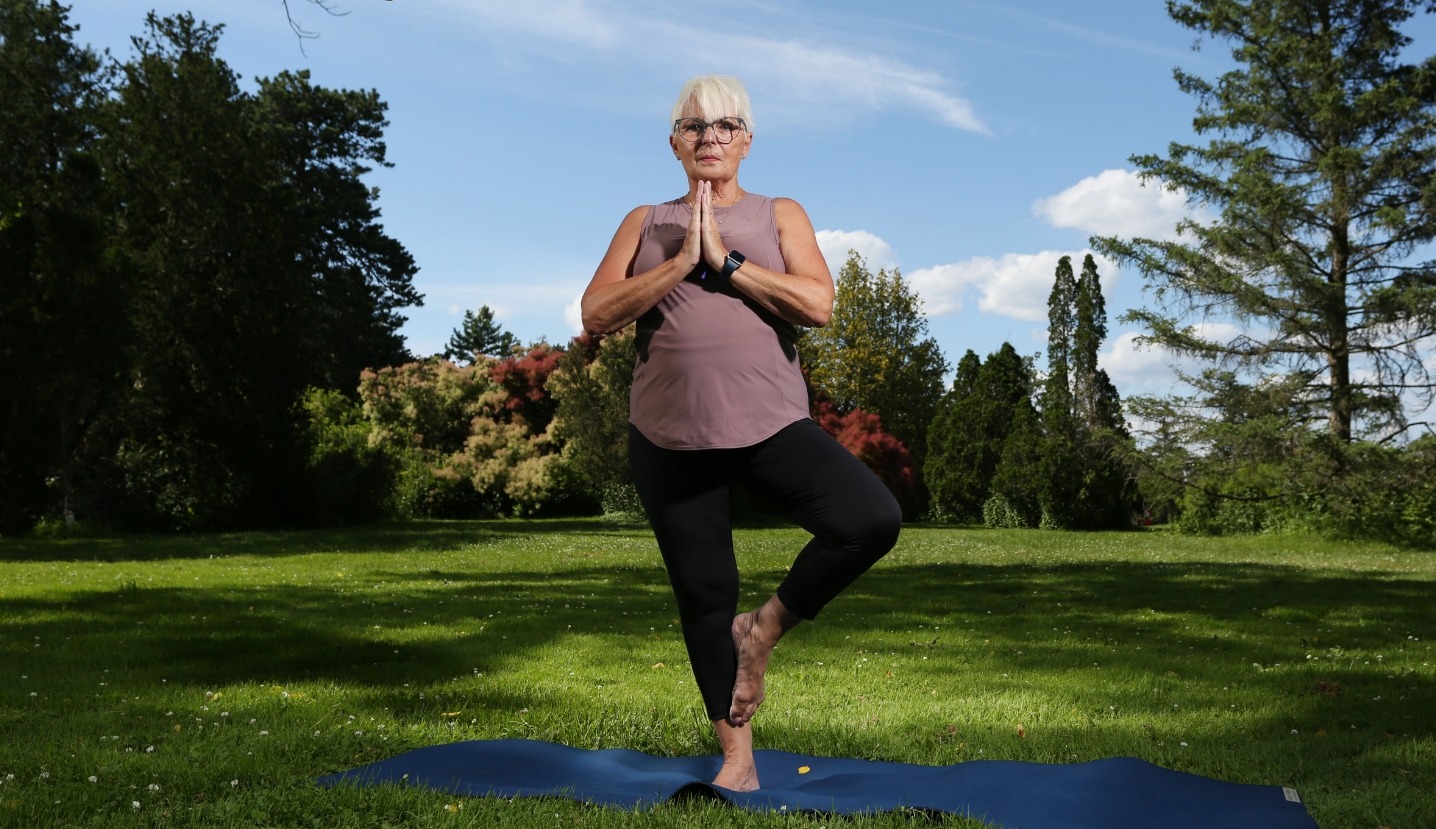
Sue Lefebvre is a registered social worker by profession, but about five years into retirement from her career with the federal public service, she developed an interest in the human spirit and the ways humans express their joy and grief through ritual.
“I’m [now] a social worker in private practice so I see a lot of stuff,” says Lefebvre, a member of the National Association of Federal Retirees’ Ottawa branch. “And I’ve seen people going through a traumatic experience and I’ve just thought — ‘Wow, there has to be more here.’”
She soon concluded that ritual and ceremony give people, including her, meaning.
“It’s about determining what my life means,” she says. “For me, [that meaning comes from] helping people.”
Lefebvre isn’t religious, but she sought out ritual — weddings and funerals, for example — in her quest to live a more spiritual or meaningful life and, as part of that journey, she became an officiant who can perform these ceremonies.
“When I perform a wedding and a funeral, I get a lot of meaning,” she says, adding that when she’s seeking a more inward-looking sense of spirit, she does yoga, a long-time passion of hers.
When meaning comes calling
Spirituality is increasingly a pursuit of seniors, and psychotherapist Valois Robichaud thinks he knows why.
Robichaud, a retired professor of gerontology who has had his own psycho-therapy practice for 17 years, says when people first retire, there’s a brief “honeymoon period” during which they find themselves just enjoying their newly found spare time and being “free” of money-earning responsibilities. Then, what Swiss psychologist Carl Jung described as “the self” begins to emerge as an object of exploration. The self, Jung said, is the unification of a person’s consciousness and unconsciousness and represents the psyche as a whole. Once people lose the identities they’ve carried through adulthood — those mostly associated with career and the pursuit of material things — and they have the time to think about it, they start to ask the big questions.
“People start to ask ‘Who am I, what is the meaning of my life, what is the meaning of my journey?” Robichaud says.
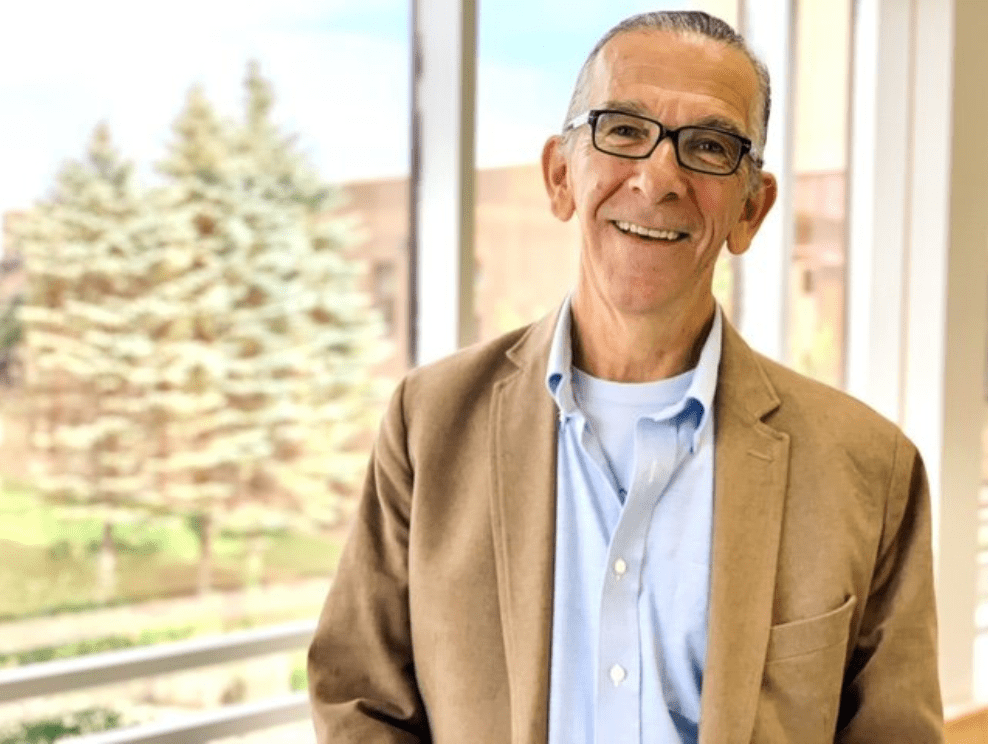
Retirement inevitably brings with it identity shifts, says Jane Kuepfer, an expert in spirituality and aging and professor at Conrad Grebel University College at the University of Waterloo.
“Those identity shifts make you ask ‘Who am I?’” she says, adding that often our identities are connected to work or who we are in relation to other people. “It’s a matter of seeking identity and seeking to understand who am I? And having time to think more deeply about these questions at that stage of life.”
The morality question
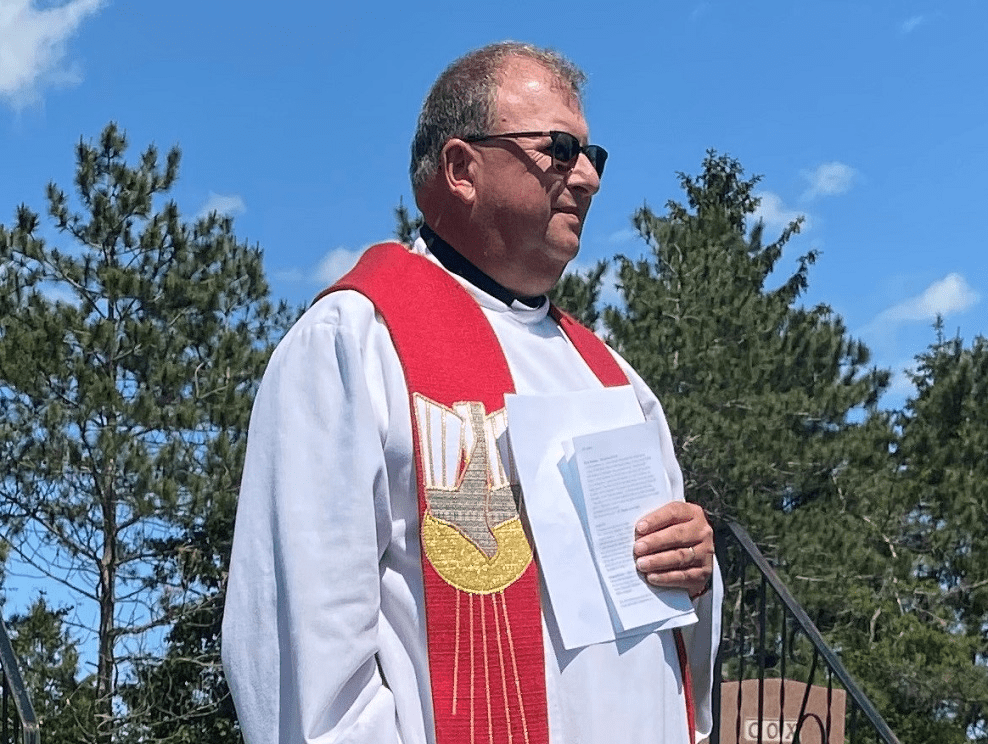
Rev. Canon Baxter Park, who served as a military chaplain for 24 years, believes people are spiritual beings and as “the uncertainty of life closes in around them,” they start to put a new emphasis on that aspect of their lives.
“They want to know if there is something beyond this,” he says. “I think a lot of people rush through life thinking they’re in charge of themselves, but when these [physical] limitations start to arise, the deeper questions can be asked.”
Park says he finds it most effective not to put limits on people’s spiritual trajectories. “If their journey is through an institution or a church or as a Muslim, or a follower of Buddha, all of this points to an answer that the secular world doesn’t necessarily have.”
Christianity offers eternal life, he notes, while other spiritual options offer non-eternal comforts. He says the question of legacy also sometimes prompts people to look in new spiritual directions.
“People will say ‘Is this path that I’ve pursued — grabbing and gaining and moving upward, all stuff we can’t take with us no matter what we believe — all there is, or is there an opportunity for me to reflect and come to a new conclusion about what life is really about?”
Baxter, who defines spirituality as one’s “individual walk of faith,” says he finds people become more generous because they realize life is about sharing and giving, not just gaining.
“…to understand our relationship and our common humanity and a legacy that we can leave behind and things we can do that will make this world a better place even after we’re gone,”
REV. CANON BAXTER PARK
“And I would say that’s a move in a spiritual direction, to understand our relationship and our common humanity and a legacy that we can leave behind and things we can do that will make this world a better place even after we’re gone,” Park says.
And, in retirement, people have more time to do the things they love, but as you get older you start to lose some of your ability to enjoy those things, Park says, referencing sports fans whose eyesight limits their ability to watch the game, or voracious readers whose cataracts put a stop to that, music lovers whose hearing limits their ability to indulge fully in that pastime.
“What are you left with?” he asks. “There’s a lot of time where you’re left inside of yourself. Ultimately, we are spiritual, beings. At the depth of our souls, there are things that we have control of, even when other things are going out of our control and one of them is how we relate within ourselves to what might be a spiritual being beyond ourselves.”
Even as the number of organized religion followers fall, a survey published in 2021 by University of Lethbridge sociologist Reginald Bibby, and carried out in Canada, the U.S. and the U.K., found that 55 per cent of the 1,500 Canadians surveyed said they expect they will “continue to exist in some form” after they die while one in three people acknowledged they engage in private prayer.
Robichaud, who has a Ph.D. in education and is a retired professor of gerontology, says the mortality question also creeps in, inevitably, with age, and leads to spiritual searches. He says his clients become afraid to be alone and afraid of the unknown. In short, retirement, and its implicit suggestion of mortality, even if it’s not imminent, put us in the midst of a spiritual challenge.
Along with adding prayer to their rituals, some of his clients return to their Christian roots by attending organized religion services and they find peace there. Others find their “self” in meditation or yoga, or both and still others explore other religious possibilities, including those offered by Buddhism or Hinduism. Many find their inner selves in nature. He recommends his clients walk in nature, connect with the trees and the birds and accept that much of what surrounds us is living — and we are part of it.
“Then they tell me they’re doing better,” Robichaud says. “They say ‘I think I can love myself better.’ This is spirituality for me.”
Jane Kuepfer’s book guide to aging and spirituality
- The Inner Work of Age: Shifting from Role to Soul — Connie Zweig
- The Spirituality of Age: A Seeker’s Guide to Growing Older — Robert L. Weber and Carol Orsborn
- Falling Upward: Spirituality for the Two Halves of Life — Richard Rohr
- On the Brink of Everything: Grace, Gravity and Getting Old — Parker J. Palmer
- From Age-ing to Sage-ing: A Revolutionary Approach to Growing Older — Zalmon Schachter-Shalomi and Ronald S. Miller
- The Grace in Dying: A message of Hope, Comfort and Spiritual Transformation — Kathleen Dowling Singh
- The Grace in Aging: Awaken as you Grow Older — Kathleen Dowling Singh

Sage60, the digital sister of Sage, delivers compelling stories on healthy aging, advocacy, and community.
Federal Retirees represents active and retired public servants, Armed Forces, RCMP, judges, and their families.