
More support needed for veterans
A report recommends a healthy aging strategy for veterans among other policy proposals to keep veterans mentally and physically healthy as they age.
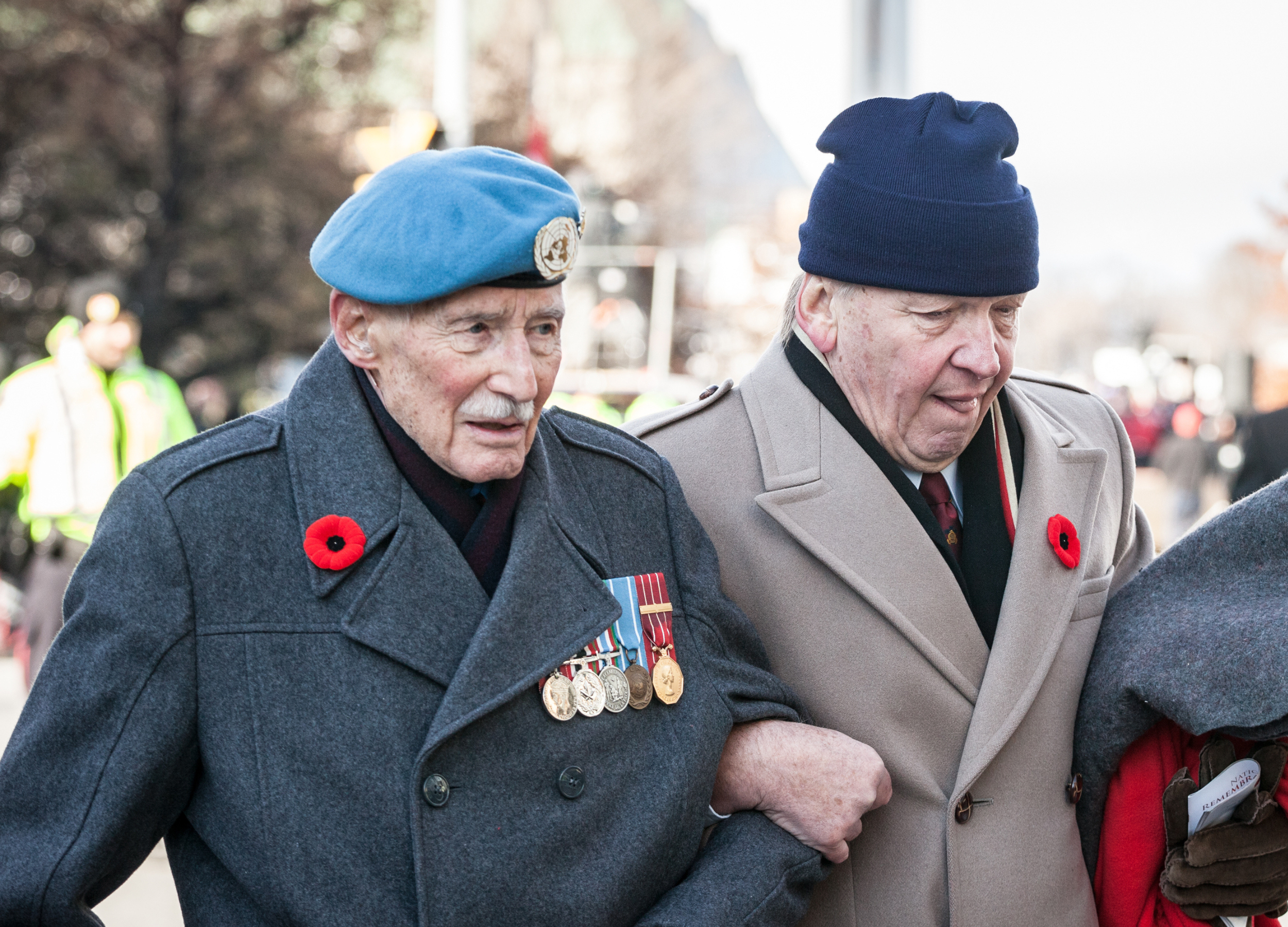
A report recommends a healthy aging strategy for veterans among other policy proposals to keep veterans mentally and physically healthy as they age.
Canada’s veteran population is aging, with increasingly complex mental and physical health needs, and there is a pressing need to determine how best to support older veterans, according to a new report from the National Institute on Aging, the Canadian Frailty Network and the Canadian Institute for Military and Veteran Health Research. In 2003, only six per cent of veterans with service since 1954 were over 70 years old; today, that figure is 33 per cent.
This group has higher rates of back pain, arthritis, depression, anxiety and post-traumatic stress disorder than the average Canadian of the same age and sex. The proportion of veterans living with three or more mental health disorders rose from 3.1 per cent in 2002 to 21.9 per cent in 2018. They were also more likely to experience physical activity limitations, such as needing help with at least one activity of daily living.
These challenges can be compounded by intersecting factors such as gender, race, Indigenous identity and 2SLGBTQI+ status. For example, women veterans were more likely than men to report activity limitations and certain mental health and chronic health conditions. They also faced a higher risk of sexual misconduct, assault or discrimination. Despite this, equity-deserving groups have often been underrepresented in research on veteran health and well-being.
The report identifies several programs that support this aging population, including the Veterans Independence Program, Caregiver Recognition Benefit, Attendance Allowance and Treatment Benefits Program. However, these programs are spread across federal, provincial/territorial and community systems, which makes navigation more difficult. The system also relies heavily on unpaid caregivers, who are key to the effectiveness of home-care services for veterans aging in place. Unpaid caregivers of veterans often face high stress, financial strain and poor mental and physical health. Spouses of veterans affected by PTSD also report increased mental health challenges, marital stress and a higher risk of divorce.
Researchers also reviewed how other countries support older veterans, including the United States, Australia, New Zealand and the United Kingdom. They found substantial variation between countries. For example, some systems provide direct financial support for long-term care, while others rely on the charitable sector for residential and home care. Similar differences exist in physical and mental health programs for older veterans. The U.S. has a specific program called Geriatrics and Extended Care, that provides tailored information; other countries do not have comparable services. As in Canada, initiatives for veterans from equity-deserving groups remain limited.
The report concludes with six evidence-informed policy recommendations: Develop a healthy aging strategy for Canada’s aging veterans; evolve the Veterans Independence Program to better meet the needs of future generations; support veterans to age in the right place by building a more comprehensive continuum of long-term care services; strengthen supports for unpaid caregivers; integrate best practices in mental health and trauma-informed care into everyday care; and expand research and access to trauma-informed, culturally safe care for aging veterans from equity-deserving groups.