Canada and the UN Convention
The United Nations is drafting a convention to protect older people, and Canada has decided to engage in the process.
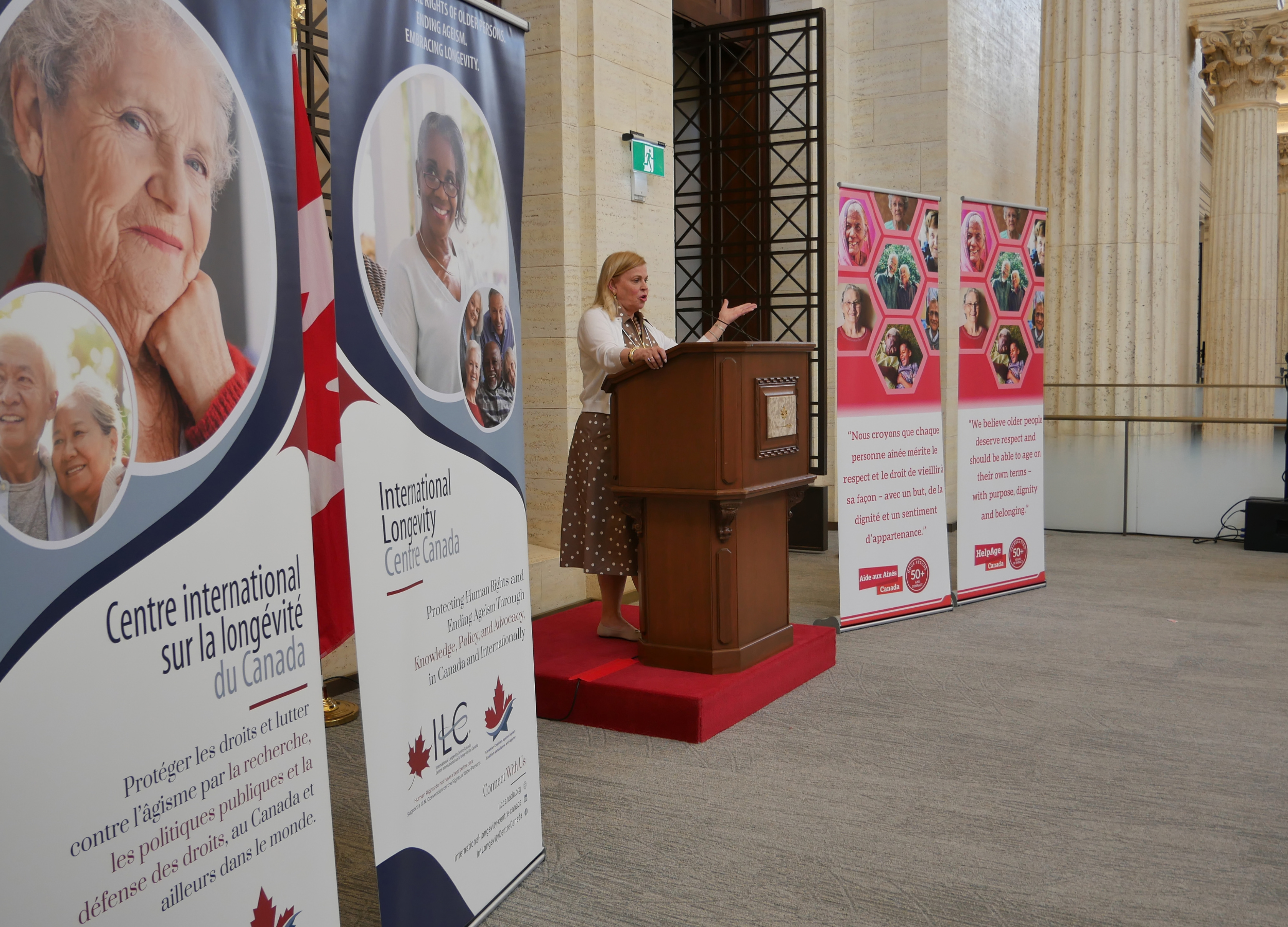
Margaret Gillis, co-founder of the International Longevity Centre Canada, says a convention on the rights of older persons is important because it closes a gap in international human rights law. Photo: ILC Canada
The good news is that the United Nations Human Rights Council is moving ahead in drafting a convention on the Rights of older persons. And the Canadian government has recently confirmed its representatives can engage in the negotiations on the convention currently being drafted.
“Engaging in negotiations is an important step forward and Canada is saying the right things in terms of supporting human rights as an obligation of the state and ensuring older persons are involved in the convention’s negotiation,” says Margaret Gillis, founder and president emerita of the International Longevity Centre (ILC) Canada and an ambassador for Elder Abuse Prevention Ontario.
Gillis adds that she wishes Canada would champion the convention the way countries such as Slovenia, Portugal, Ghana, Brazil and Argentina have been, but she’s pleased Canada will be at least champion human rights as it usually does.
The United Nations (UN) convention is increasingly urgent because aging populations are transforming their societies. By 2050, one in five people will be older than 60, with 80 per cent of them living in low- and medium-income countries.
Canada is not immune. By 2030, a quarter of Canada’s population will be older than 65 and older Canadians face, among other challenges, ageism, barriers in access to health and social care, elder abuse, housing insecurity and homelessness. And yet, until the convention is drafted, there is no dedicated international human
rights instrument for older persons.
Gillis says there were many good reasons for Canada to finally decide to participate in the drafting of the convention. First, it closes a gap in international human rights law by creating a binding treaty that addresses ageism, age discrimination, elder abuse and neglect, access to long-term care, health-care inequities and other unique challenges of aging. Such a convention also combats ageism, clarifies and improves accountability of governments’ obligations to their older citizens, and supports Indigenous and marginalized older people and people facing prejudices.
“A society is ultimately judged by how it treats its older citizens,” Gillis says. “Canada should lead the call for a UN Convention on the Rights of Older Persons because growing older should never mean losing rights, voice or dignity. A convention would transform principles into protections — challenging ageism, demanding accountability and affirming that every person has the right to age with respect, equality and purpose.”
Gillis points to the fact that Canada itself needs this convention as it had one of the worst records in the world for deaths in long-term care facilities during the COVID-19 pandemic, with 14,000 deaths.
“It was a national tragedy and a stain on our collective conscience,” Gillis says. “Little or nothing has changed to prevent it from happening again.”
She also noted that 550 older people died in the British Columbia heat dome of 2021 and that 90 per cent of them were over the age of 60. As a result, the federal and provincial governments involved earned stern condemnation from Human Rights Watch for not protecting their citizens.
Before Canada decided to support the drafting on the convention, Gillis’s ILC Canada held an event at the Senate of Canada to generate support for it. Federal Retirees national board chair Gisèle Tassé-Goodman, and Jessica Searson, Federal Retirees’ director of advocacy, attended the event. Among the speakers was former UN ambassador Bob Rae, who has been a long and strong advocate for the convention.