
Back from the brink
National Public Service Week series: A team of inveterate public servants helped save the whooping crane, North America’s tallest bird, whose numbers had dwindled to 22 birds in the 1940s.
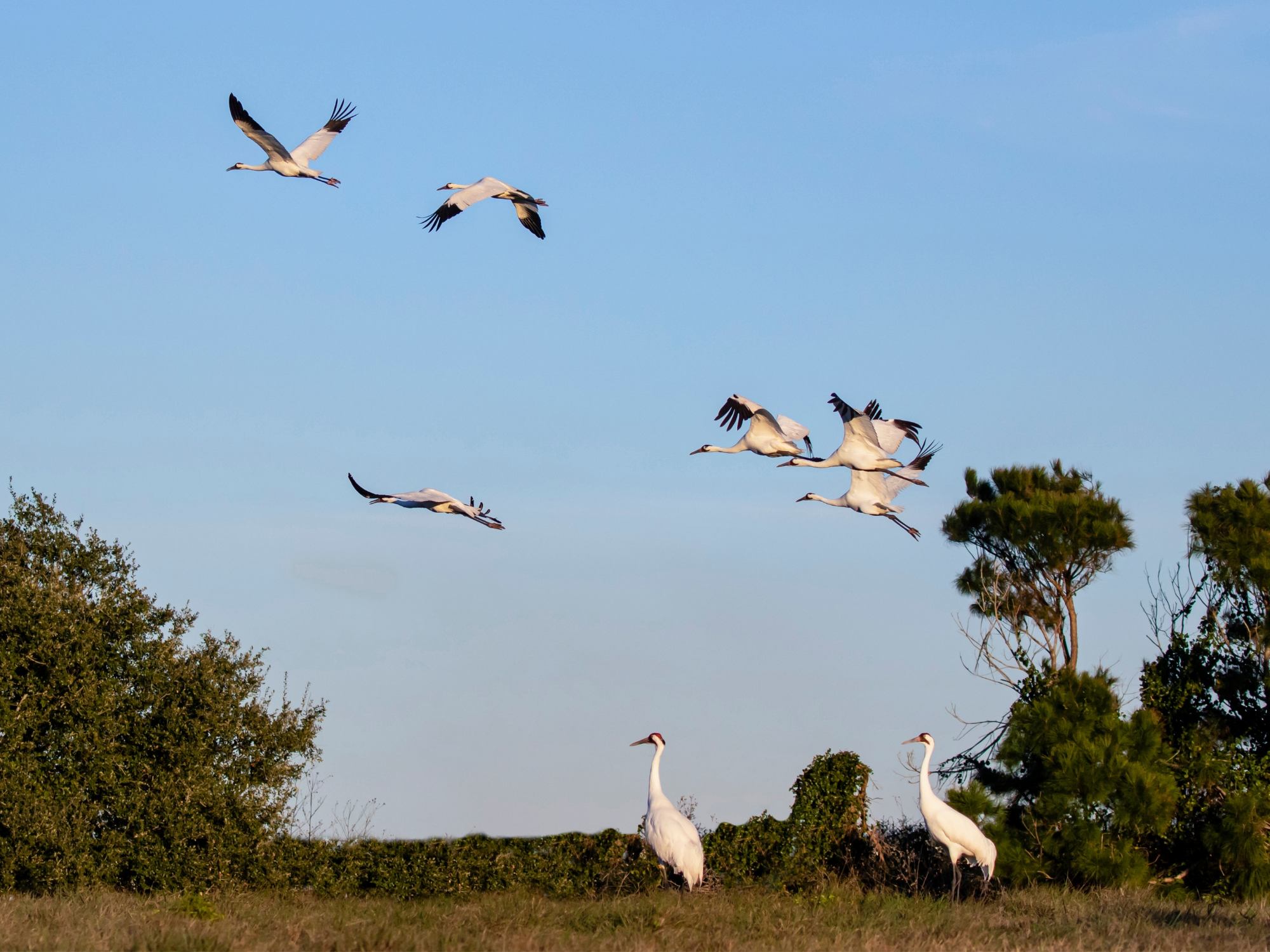
The search for a mysterious nesting ground helped save North America’s tallest bird.
In honour of National Public Service Week, we present a series of discoveries, innovations and achievements made possible by public servants on the job. Public servants work hard every day in the service of Canadians, and these stories illustrate some of the particularly exceptional work they’ve done to tackle some of humanity’s biggest challenges. From medical breakthroughs to bold, creative problem-solving, we take a look at the talent, skill and gumption they exhibited to get the job done.
In the 1940s, there were 22 whooping cranes left in the world. Their estimated numbers had been as high as 1,500 in the mid-1800s. The majestic bird — the tallest bird native to North America — stands about five feet tall and its white feathers and long legs make it a frequent target for photographers and hunters. The species had fallen to the brink of extinction because of shooting (which is now illegal) and destruction of their habitat in the Prairies due to agricultural progress.
In the early 1940s, the birds were dwindling in numbers, but that wasn’t discovered until later because the remaining birds were highly visible in their wintering grounds around the Gulf of Mexico. The mystery at the time was where they nested in the north. The last seen nest was in Saskatchewan in 1926.
In 1954, forestry officials Dan Landells and George Wilson were flying to a forest fire and noticed some large white birds below that they thought might be whooping cranes. William Fuller, the region’s biologist, caught the next helicopter and confirmed they were whooping cranes and were situated in Wood Buffalo National Park. By 1955, Canadian Wildlife Service biologist Ray Stewart joined American ornithologist Robert Porter Allen and Bob Stewart of the U.S. Fish and Wildlife Service on a ground survey of “the most inhospitable wetlands terrain imaginable,” complete with paddling and portages, according to Parks Canada.
After two searches, they were about to give up when two team members were offered a helicopter drop-off to a new location. It yielded results.
“It has taken 31 days and a lot of grief, but let it be known that at 2 p.m. on this day, 23rd of June, we are on the ground with the whooping cranes! We have finally made it,” is a team member’s quote as reported in the book Cranes, A Natural History of a Bird in Crisis.
Recovery efforts began in 1966 when Canadian Wildlife Service biologist Ernie Kuyt and a team oversaw the first wild egg collection for captive breeding. They waded through wetlands and never took more than one egg from a nest. They carried them in socks. Hot water bottles and a portable incubator kept them warm until they arrived at Patuxent Wildlife Research Center in Maryland.
Between 1966 and 1998, 242 eggs went to captive-breeding facilities, including the Calgary Zoo. Kuyt, who received the Order of Canada for his efforts, led a colour-banding project beginning in 1977 and there was a radio-tracking project between 1981 and 1983.
While the birds remain an endangered species, there are now 557 in the Aransas-Wood Buffalo population. They nest at Wood Buffalo National Park, which straddles Alberta and the Northwest Territories, and winter on the coastal shores of Texas. The total continental population, including those living full-time in Florida and those in captivity, is now 830. The cranes remain endangered because of their low population numbers, slow reproductive patterns and the dangers of their migration twice annually.
Scientists at Parks Canada and the Canadian Wildlife Service continue to work on a recovery plan whose goal is to reach 1,000 birds by 2035.