
Preludes to public service
Stephen Parker spent 25 years at the CRTC before returning to his first love — music.
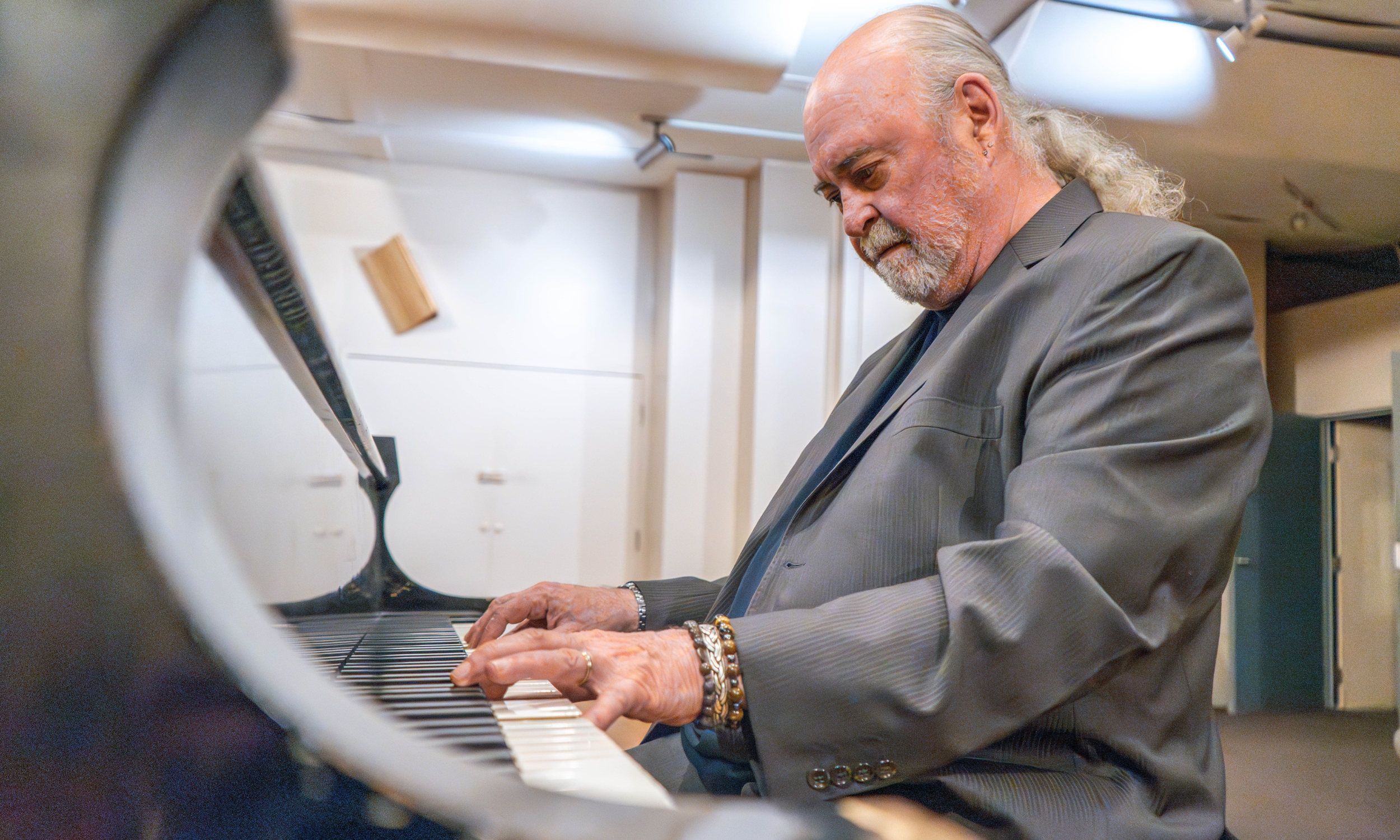
Stephen Parker worked for the CRTC for 25 years and had a career in music before and after his time with the federal government. Photo: Christiane D’Aoust
Disco drove Stephen Parker to work for the federal government, where he stayed for 25 years. “When disco came in, a lot of the live scene kind of disappeared,” says Parker, who had been performing live around Ottawa and touring when dance clubs sashayed into the scene. “I was doing sort of the folky singer-songwriter thing, and a lot of the small coffee houses closed down.
He applied for a federal job and was soon hired at the CRTC, in the radio directorate. “I spent the next 25 years there.”
His first task was monitoring radio stations for compliance with new Canadian content regulations, and later he analyzed applications for new radio stations.
His last years at CRTC were as a senior radio directorate application and radio policy analyst, and he also worked to create new policies, such as “emerging artist” regulations for new Canadian artists on radio.
“The work was extremely interesting,” he says, “but I got the itch to get back into the private sector music business.”
Music had been part of his life since he was 10. In the early 1970s, he toured with the Canadian rock band Brighton Rock (not the later 1980s’ band of the same name). Tired of touring, he went to Humber College and graduated with a degree in music composition and theory, with minors in orchestration and arranging. He returned to Ottawa and “started wearing the entrepreneurial hat again. I started a production company, Parker Libby Productions, and I produced a number of records. We produced a radio documentary for CHEZ-FM called Capital Roots, a five-part history of the Ottawa rock scene from about 1958 to ’72.”
Upon retirement in 2010, he and wife Christiane D’Aoust “got tired of the city” and moved to L’Ange-Gardien, Que., where, as his website says, he “continues to find inspiration in the serene surroundings.”
He started another company and produced a syndicated radio show on Canadian country music, which in 2015 won a Canadian Country Music Association award for best radio/TV special. He then threw himself back into playing and composing and that’s what he does now.
He also launched PSP records, where he can release his own recordings and those of other Canadian classical or jazz artists. He heaps praise onto one signing — namely, Mark Ferguson, the jazz pianist and composer (and lecturer at Carleton and McGill universities). “We’re putting him in for a Juno Award. He’s an incredible player.”
Parker has a recording of his own preludes on his website, and plans a CD of his new piano works in the fall.
He enjoys taking a break to reminisce about his Ottawa performance days. He never played the legendary folk club Le Hibou, but he had a part-time job there that led to meetings with famous musicians, such as Sonny Terry and Brownie McGhee.
Today he lives surrounded by forest with his wife, D’Aoust — “a pretty good piano player herself” — and their dog, a Siberian husky-Malamute cross named Gamay.
D’Aoust and he had lived together for “I don’t know how many years,” and every year on their relationship anniversary he’d ask her to get married and she would demur. And then, “I think in 2000, I said, ‘Hell, Chris, let’s get married.’ I was doing the dishes at the time. She said, ‘OK,’ and I dropped a plate into the sink and broke it.”
Visit phillipstephenparker.com to hear his music and see his studio.