Protecting the world from Ebola
National Public Service Week series: Scientists at the National Microbiology Lab of the Public Health Agency of Canada developed a vaccine to protect Canadians and others from the Zaire strain of Ebola.
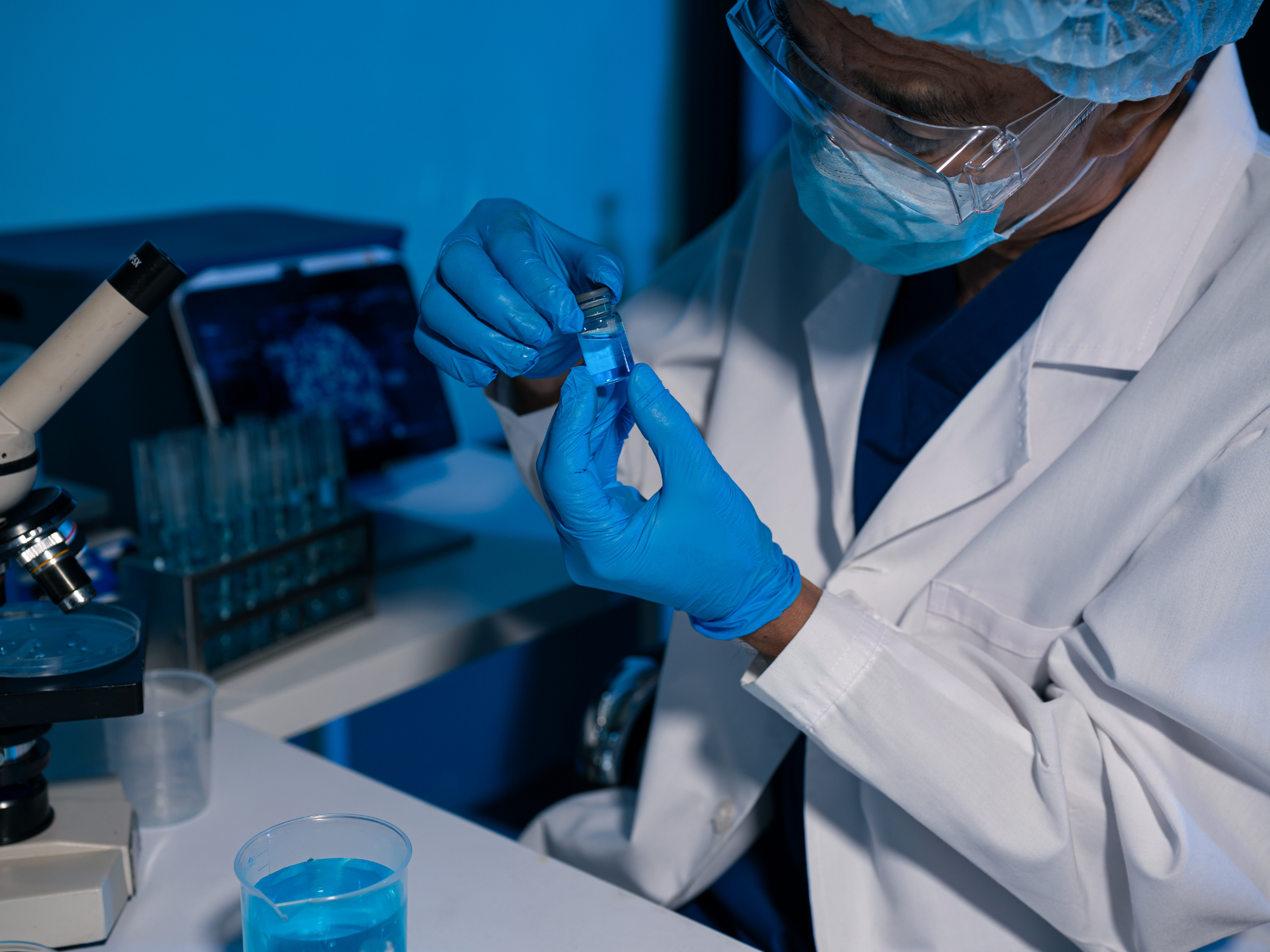
The road to an Ebola vaccine began long before most people had even heard of the virus.
In honour of National Public Service Week, we present a series of discoveries, innovations and achievements made possible by public servants on the job. Public servants work hard every day in the service of Canadians, and these stories illustrate some of the particularly exceptional work they’ve done to tackle some of humanity’s biggest challenges. From medical breakthroughs to bold, creative problem-solving, we take a look at the talent, skill and gumption they exhibited to get the job done.
Thanks to the work of Canadian scientists at the National Microbiology Lab in Winnipeg, the world has a vaccine for the Zaire strain of the deadly Ebola virus. We are getting a reminder of how important a discovery this was as yet another Ebola outbreak unfolds in the Democratic Republic of the Congo (DRC), South Sudan and Uganda. Sadly, there isn’t a vaccine for the Bundibugyo strain that has hit Africa this time, but efforts are currently underway to develop one.
Ebola, which is a hemorrhagic fever, was first identified in 1976 in what is now the DRC. During that outbreak, it spread to 300 people and killed 88 per cent of them.
Canada’s involvement came in 1999 when the National Microbiology Lab’s Heinz Feldman began studying the pathogenic effects of the virus. By 2001, Ebola was being seen as a potential bioterrorist threat that could become a major global epidemic. And yet the public servants’ work wasn’t always the easiest sell to higher-ups who didn’t prioritize the development of a vaccine for a disease affecting people in faraway places.
Reporting in the Canadian Medical Association Journal, Francis Plummer writes that “it took several years to convince funding agencies of the value of spending the National Microbiology Laboratory’s limited resources on Ebola vaccine research over other pressing public health issues in Canada.
“In 2005, a change in funding body leadership, an increasing body of efficacy data and strong advocacy by scientists resulted in the research team securing half the requested funding for development of the Ebola vaccine. There followed the dogged work of building the vaccine program, putting contracts in place and securing sign-off from Ottawa.”
Creating the vaccine involved inserting a single gene from the surface of the Ebola virus in place of a gene in an animal virus. While the vaccine does contain a component of the Ebola virus, it doesn’t contain any of the live virus. When given, the vaccine trains the immune system to react and beat the infection.
When the 2014–2015 Ebola outbreak hit in West Africa, Canada’s vaccine was already on hand. Canada donated 1,000 clinical trial vaccine lots to the World Health Organization as well as more than $100 million for trials and other countermeasures. Canada also helped in the development of a treatment for Ebola that was made up of three different antibodies, two of which were discovered at the National Microbiology Lab.
Scientists are now racing against time to develop a vaccine for the Bundibugyo strain of Ebola, but the Zaire strain’s creation is a good example of how public servants can make an international humanitarian impact while keeping Canadians safe in an increasingly interconnected world.